
When Asking Donations for Aligarh Muslim University (AMU) were seditious
When Asking Donations for Aligarh Muslim University (AMU) were seditious: Banned Poem ‘Muslim University ka Chanda’
There is a misconception or a wrongly held notion that Aligarh Muslim University was created by the British or at least had a full support of the colonial government. In the years 1919 & 1920 Muslims, led by Agha Khan, were collecting donations to upgrade Mohammedan Anglo Oriental (MAO) College into a University (AMU).
1962 : When AMU teachers took on Nehru government after attack on the University
Maulvi Wajahat Hussain ‘Wajahat’ was one of those who were taking keen interest in this movement. Maulvi, the nationalist poet whose poems were often banned and confiscated, wrote many poems to aware people for the need of the Muslim University, Aligarh. Here I am presenting one such poem ‘Muslim University ka Chanda’ (Donation for Muslim University) which he wrote and was subsequently banned by the British.
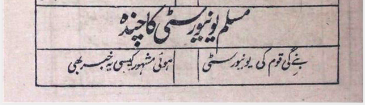
British believed that donations for Muslim University, Aligarh challenges its authority and, hence, is seditious. The poem was banned and confiscated in 1920 by the government. As Aligarh Muslim University (AMU) completes its hundred years of University status I share this poem with you.
How prophetic was the poet when he wrote:
Banega ilm ka makhzan Aligarh
Sikhayega har ik fun bhi hunar bhi
(Aligarh will turn into a treasure of knowledge
It will teach us all skills as well as arts)


