Sir Syed Ahmad Khan and the Mission to Educate Indian Muslims
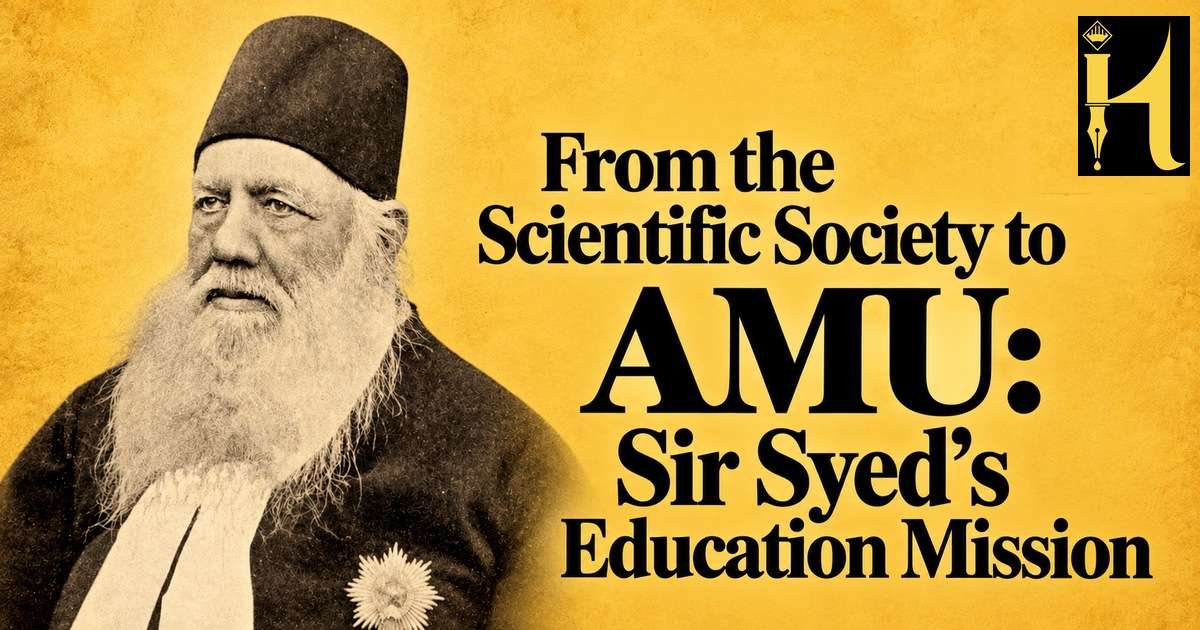
Sir Syed Ahmed Khan (17 October 1817-27 March 1898) was a prominent Indian educationist, social reformer, historian, and intellectual who pioneered modern education among Muslims in nineteenth-century India. Born in Delhi during the declining years of the Mughal Empire, he belonged to a respected family associated with the Mughal court. His family background, traditional education, professional experiences, and extensive literary contributions shaped his vision of educational and social reform.
At a time when the Muslim community was experiencing political decline, economic difficulties, and educational backwardness, Sir Syed advocated modern scientific education, English-language learning, rational thinking, and social reform.
His educational mission emerged from the conviction that Muslims could not improve their condition merely by recalling their glorious past. They needed to acquire modern knowledge, develop professional skills, and participate in the changing social, economic, and administrative structures of India.
Through the Aligarh Movement, Sir Syed established an intellectual and institutional foundation that transformed Muslim educational aspirations and influenced generations of students. He did not limit his contribution to establishing schools and colleges. He sought to change the mindset of the community by encouraging Muslims to embrace modernity while maintaining their cultural and religious identity.
His educational philosophy remains relevant to contemporary discussions about inclusive education, scientific progress, and community development.
Sir Syed’s Family and Early Life in Mughal Delhi
Sir Syed Ahmed Khan was born on 17 October 1817 in Delhi. His father, Syed Muhammad Muttaqi, belonged to a distinguished family connected with the Mughal aristocracy and courtly circles. His mother, Aziz-un-Nisa Begum, played an important role in his early upbringing and moral education. Sir Syed held his mother in high regard, and her influence contributed to the development of his character.
Syed’s family valued education, Persian and Arabic learning, religious scholarship, and cultural traditions. His upbringing in Delhi immersed him in the intellectual atmosphere of the Mughal capital, where literature, history, philosophy, and religious learning thrived.
Sir Syed married Parsa Begum, also known as Mubarak Begum. The couple had three children: Syed Hamid, Syed Mahmood, and Ameena Begum. His son Syed Mahmood became a distinguished jurist and was among the early Indians to receive a legal education at Cambridge. He later served as a judge of the Allahabad High Court.
Sir Syed’s personal experiences and family background influenced his understanding of the social changes taking place in India. Although he came from an established family, he recognised that inherited social status alone could not guarantee progress in a rapidly changing society. He increasingly emphasised modern education as the foundation for advancement.
As a Knight Commander of the Order of the Star of India (KCSI), Sir Syed Ahmed Khan was given the title ‘Sir’ by the British government in 1888 in recognition of his service as a member of the Imperial Legislative Council and his allegiance to the British monarchy.
In 1869, he was named a Companion of the Order of the Star of India (CSI). As a Knight Commander of the Order of the Star of India (KCSI), Sir Syed Ahmed Khan was given the title ‘Sir’ by the British government in 1888 in recognition of his service as a member of the Imperial Legislative Council and his allegiance to the British monarchy. In 1869, he was named a Companion of the Order of the Star of India (CSI).
Sir Syed’s Own Education: Home Learning, Company Service and 1857
Sir Syed received his early education at home, as was customary among many elite Muslim families of the period. His studies included the Quran, Arabic, Persian, mathematics, and traditional subjects. He also developed an interest in history, literature, and religious thought.
Unlike many later reformers, Sir Syed did not receive a university education in the modern sense. His intellectual development came largely through self-study, reading, professional experience, and engagement with contemporary political and social questions.
In 1838, he entered the service of the East India Company judiciary. His career exposed him to British administrative institutions and the increasing importance of English education.
The Revolt of 1857 profoundly influenced his thinking, encouraging him to examine the causes of political conflict and the need for reform. His experiences strengthened his conviction that Muslims needed modern scientific knowledge, English-language education, and rational thinking to participate effectively in public and professional life.
Muslims After 1857: Decline, English Education and the Case for Reform
The nineteenth century was a period of profound political and social transformation in India. Following the decline of the Mughal Empire and the expansion of British colonial rule, traditional administrative and educational structures underwent significant changes.
Many Muslim families that had previously enjoyed positions in administration and scholarship experienced a decline in their social and economic circumstances. The Revolt of 1857 further intensified these difficulties. The British government and certain segments of the Muslim population experienced particularly strained relations after suppressing the revolt.
The increasing importance of English-language education and Western scientific knowledge also created new challenges for communities whose educational traditions were primarily based on Arabic, Persian, theology, philosophy, and classical learning.
Sir Syed recognised that resistance to modern education could restrict Muslims’ access to government employment, professional opportunities, and emerging intellectual institutions. He believed that the community needed educational reform to overcome these disadvantages.
Rather than encouraging Muslims to remain isolated from modern developments, he advocated the acquisition of contemporary knowledge and the development of a progressive outlook. His objective was to prepare Muslims to participate confidently in the changing circumstances of colonial India.
Sir Syed’s Philosophy of Education: Science, English and Reason
Sir Syed Ahmed Khan believed that education was essential for individual advancement and collective development. He argued that knowledge could empower communities, improve economic conditions, strengthen intellectual capabilities, and encourage social reform. His educational philosophy rested on several important principles.
First, he emphasised the importance of modern scientific education. He believed that students should study science, mathematics, history, philosophy, and other subjects that could help them understand the contemporary world.
Second, he advocated English-language education because English had become an important medium of administration, higher education, and professional communication under British rule. Learning English would enable Muslims to access new knowledge and compete for employment opportunities.
Third, he promoted rational thinking and intellectual inquiry. He encouraged people to examine social practices critically and develop an evidence-based understanding of the world.
Fourth, he believed that education should develop character, discipline, ethical responsibility, and leadership. For him, educational institutions had a responsibility to prepare students not only for employment but also for responsible participation in society.
His vision was therefore both educational and social. He wanted to create an intellectually confident community, economically capable, and prepared to respond to changing circumstances.
The Scientific Society (1864): Bringing Modern Knowledge to Indian Readers
One of Sir Syed’s significant contributions was the establishment of the Scientific Society in 1864 at Ghazipur. The society subsequently became associated with Aligarh and played an important role in promoting modern knowledge. Its principal objective was to translate important works on science, history, agriculture, and other subjects into languages accessible to Indian readers.
Sir Syed understood that modern education could not spread effectively if knowledge remained restricted to those who understood English.
The Scientific Society encouraged intellectual discussions and promoted engagement with contemporary developments in science and technology. It also sought to create an environment in which traditional scholarship could interact with modern ideas.
Sir Syed believed that education should extend beyond religious instruction or classical learning, as demonstrated by this initiative. Instead, it should equip people with the knowledge necessary to understand economic, scientific, and social changes.
The Aligarh Movement: Journals, Ideas and a New Educational Consciousness
The Aligarh Movement became the most influential expression of Sir Syed’s educational mission. It sought to encourage modern education among Muslims and promote intellectual and social reform.
In 1866, Sir Syed launched the Aligarh Institute Gazette, which disseminated information about modern developments and encouraged public discussion.
In 1870, he established the journal Tahzib-ul-Akhlaq, through which he advocated social reform, rational thinking, improved moral conduct, and a progressive intellectual outlook.
These publications helped spread his educational ideas beyond the classroom. They encouraged Muslims to reconsider practices that obstructed social progress and to recognise the importance of education in improving their collective circumstances.
The Aligarh Movement also developed a network of intellectuals, teachers, students, and reformers who supported modern education. It gradually became a major force in the development of a new Muslim educational consciousness in India.
Muhammadan Anglo-Oriental College: From a School in 1875 to Aligarh Muslim University
Sir Syed’s most enduring achievement was the establishment of the Muhammadan Anglo-Oriental College at Aligarh. The institution began as a school in 1875 and developed into a college in 1877.
Inspired partly by British residential educational institutions, particularly Oxford and Cambridge, Sir Syed sought to establish a centre that combined modern Western education with the moral and cultural traditions of Muslim society. The college encouraged English-language learning and the study of modern subjects, including science, mathematics, history, and literature. It aimed to prepare students for professional careers, administrative responsibilities, and public life.
The institution also sought to cultivate discipline, confidence, intellectual curiosity, and leadership. Sir Syed believed that Muslim students needed an educational environment in which they could acquire modern knowledge without feeling compelled to abandon their cultural identity.
The Muhammadan Anglo-Oriental College eventually became Aligarh Muslim University in 1920. Its development into a university represented the continuation of Sir Syed’s educational vision.
The institution contributed to the emergence of generations of Muslim scholars, administrators, lawyers, teachers, writers, and public figures. Its influence extended beyond Aligarh, encouraging educational aspirations among Muslims in different parts of the Indian subcontinent.
Education and Livelihood: Who Benefited from the Aligarh Mission?
Sir Syed understood that educational backwardness could contribute to economic disadvantage and social marginalisation. He therefore considered education a means of improving the community’s economic and professional position. By encouraging Muslims to learn English and modern subjects, he sought to increase their access to government employment, law, teaching, administration, journalism, and other professions.
Education could help individuals acquire new skills, improve their livelihoods, and participate more effectively in public life. His movement also encouraged the development of educational networks and institutions that could support future generations.
The Aligarh model demonstrated the importance of community participation in establishing and sustaining educational institutions. However, the movement did not distribute its initial benefits equally. Its early appeal was particularly strong among sections of the educated and landed Muslim elite, while poorer households and many rural communities continued to face significant educational barriers.
Nevertheless, Sir Syed established a powerful principle: sustainable social advancement requires investment in education, institutional development, and human capabilities.
Faith and Reason: Sir Syed’s Attempt to Reconcile Religion and Science
A distinctive feature of Sir Syed’s educational mission was his attempt to reconcile religious understanding with modern scientific knowledge. He maintained that reason and scientific inquiry should not automatically be treated as incompatible with religious belief.
He encouraged Muslims to study nature, society, and contemporary developments through observation, logic, and critical analysis. His interpretations of religious questions were unconventional for some scholars and generated considerable debate.
Despite these controversies, his contribution to intellectual reform was significant. He encouraged Muslims to engage with modern knowledge rather than reject it simply because it originated in Europe. His approach remains relevant today, when societies must respond to technological developments, artificial intelligence, digital transformation, and scientific innovation.
His legacy encourages educational institutions to combine scientific competence with ethical reflection and social responsibility.
The Limits of the Aligarh Project: Women, the Poor and Colonial Politics
Although Sir Syed’s contribution was substantial, his educational programme had some limitations. His early emphasis was primarily on educating Muslim men, and his approach to women’s education remained cautious in comparison with the demands of later reform movements.
Similarly, the Aligarh Movement initially focused considerably on the educational needs of socially influential groups. Expanding quality education to poorer families, rural populations, and women required broader reforms and sustained institutional investment.
His political strategy also reflected the circumstances of colonial India. He favoured cooperation with the British government and believed that educational advancement should precede certain forms of political confrontation. While this approach helped him establish educational institutions, it also attracted criticism from those who favoured a more direct anti-colonial political struggle.
These limitations should be acknowledged without overlooking his lasting contribution. Sir Syed helped make modern education a central concern of Muslim social reform and created institutions whose influence extended well beyond his lifetime.
Why Sir Syed’s Mission Matters for India Today
Sir Syed’s educational philosophy remains important for contemporary India. His emphasis on modern knowledge, professional competence, scientific thinking, and educational institutions provides valuable lessons for inclusive development.
Today, improving educational opportunities for disadvantaged communities requires investment in school education, scholarships, digital literacy, technical training, research, and higher education. Muslim students, like students from every community, need access to quality schools, universities, competitive examinations, entrepreneurship opportunities, and emerging fields such as artificial intelligence and information technology.
Government institutions, universities, civil society organisations, and community initiatives can work together to reduce educational inequality. We should pay special attention to girls’ education, first-generation learners, economically disadvantaged families, and students in underserved areas.
The central lesson of Sir Syed’s life is that educational progress requires both individual determination and institutional support. Communities must encourage learning, promote scientific inquiry, and prepare younger generations to participate confidently in a rapidly changing world.
Sir Syed’s Major Books: Asbab-e-Baghawat-e-Hind, Asar-us-Sanadid and More
Sir Syed wrote extensively on history, religion, education, and social reform. His important works include:
- Asbab-e-Baghawat-e-Hind (The Causes of Indian Rebellion, 1858): An analysis of the causes of the Indian Revolt of 1857. He criticised the shortcomings of British administration and argued for better communication between the government and Indians.
- Asar-us-Sanadid (The Remnant of Ancient Heroes/Monuments of Mughal Architecture, 1847; revised edition 1854): A significant historical and architectural study of Delhi’s monuments, buildings, and historical sites. It established his reputation as a careful observer of the city’s cultural heritage.
- Khutbat-e-Ahmadiya (1870): A work written partly in response to William Muir’s criticism of the Prophet Muhammad. It sought to defend Islamic beliefs and respond to contemporary debates about Islam.
- Tafsir-ul-Quran: His Quranic commentary, reflecting his rationalist approach to religious interpretation and his efforts to relate religious understanding to reason and the natural world.
- Tahzib-ul-Akhlaq: Although a journal rather than a single book, it was central to his literary mission. Launched in 1870, it promoted social reform, ethical conduct, rational thinking, and modern education.
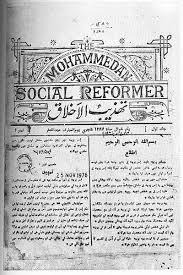
Tahzib-ul Akhlaq (تہذیب الاخلاق رسالہ), reputed monthly journal started by Sir Syed Ahmed Khan in 1870.
Conclusion: Education as a Collective Mission
Through the Scientific Society, the Aligarh Institute Gazette, Tahzib-ul-Akhlaq, and the Muhammadan Anglo-Oriental College, Sir Syed Ahmed Khan established the foundations of a movement that encouraged intellectual awakening and educational advancement.
His mission challenged the belief that traditional learning alone was sufficient to meet the demands of a changing society. He demonstrated that modern scientific knowledge, English education, rational thinking, and cultural awareness could work together to promote social and economic progress. Although his movement had limitations concerning social inclusiveness and women’s education, its historical significance remains undeniable.
The establishment of Aligarh Muslim University ensured that his educational vision would continue to influence generations of students and scholars. He was deeply attached to the Indian masses, especially Muslims in India, despite 128 years after his death.
The family background of Sir Syed Ahmed Khan, along with his self-directed intellectual development and literary achievements, played an important role in shaping his educational mission.
His historical writings preserved knowledge of India’s past, while his social and religious writings encouraged intellectual debate and reform. Through his books, journals, and educational institutions, he sought to transform Muslim society through knowledge and rational inquiry.
His legacy continues through Aligarh Muslim University and the wider educational movement that he inspired.
Sir Syed Ahmed Khan’s greatest contribution was to make education a mission of collective progress rather than merely an individual achievement. His life reminds us that the advancement of Muslims, and indeed of any community, depends on access to quality education, intellectual freedom, scientific awareness, and equal opportunities.
Sir Syed’s legacy continues to motivate the pursuit of an educated, progressive, and inclusive society in which knowledge serves as the foundation of dignity, development, and national progress.
Selected References
- Graham, George Farquhar Irving. The Life and Work of Syed Ahmed Khan, C.S.I. London: William Blackwood and Sons, 1885.
- Lelyveld, David. Aligarh’s First Generation: Muslim Solidarity in British India. Princeton: Princeton University Press, 1978.
- Troll, Christian W. Sayyid Ahmad Khan: A Reinterpretation of Muslim Theology. New Delhi: Vikas Publishing House, 1978.
- Ahmed, Sir Syed. The Causes of the Indian Revolt. 1858.
- Aligarh Muslim University. Historical materials on Sir Syed Ahmad Khan and the Muhammadan Anglo-Oriental College.
- Altaf Husain Hali – A classic biographical account of Sir Syed’s life and mission.
- The Life and Work of Syed Ahmed Khan (1885) by George Farquhar Irving Graham – An early detailed biography.
- Sir Syed Ahmad Khan: A Private Life by Iftikhar Alam Khan (translated by Ather Farouqui, 2026) – A modern deep-dive into his personal life and formative influences.