
Raja Tikait Rai (1760–1808) at Damgarha
Raja Tikait Rai was very close to the spiritual successor and the most famous disciple of Shah Basit Ali Qalandar, namely Shah Muhammad Kazim Qalandar of Kakori, Lucknow.
Read More
Exploring lesser known History
Raja Tikait Rai was very close to the spiritual successor and the most famous disciple of Shah Basit Ali Qalandar, namely Shah Muhammad Kazim Qalandar of Kakori, Lucknow.
Read More
The Vijaynagar Empire was strong with its military and cavalry they had elephant stables made where the elephants were kept which were under the guidance of the king himself.
Read More
Dental caries, an infectious disease of bacterial aetiology, is a prevalent and costly disease in both developing and industrialised countries.
Read More
In 1977, Dr Sushila Nayar retired from the political arena and continued working for the upliftment of society.
Read More
Shankar Lakshman, India’s pioneering goalkeeper-captain, redefined hockey with his daredevil goalkeeping, leading India to Olympic gold in 1956 and 1964. His legacy, a symbol of resilience and love for the sport, endures beyond the field.
Read More
Inspirational Indian-origin cardiologist Dr. Hamid Abdul Hai, renowned for medical excellence, community service, and fostering interfaith harmony, passed away on Feb 25, 2021, in Chicago. A legacy of healing, compassion, and bridging cultural divides.
Read More
India’s oldest toy haven at Connaught Place, RAM CHANDER & SONS, since 1890. Meet Mr. Satish Sundra, keeper of timeless wonders, where every child’s dream comes to life.
Read More
I’ll never forget the first taste of Rooh Afza, Indian syrup that was and still a mainstay at almost every
Read More
In the 1952 Helsinki Olympics, Jadhav stunned the audience by defeating opponent after opponent with ease in the first 5 rounds of bantamweight freestyle wrestling. In the sixth round the adept was asked to fight Soviet Union’s Rashid Mammadbeyov.
Read More
Bhagwat Chandrasekhar made his test debut for India against England at Mumbai in 1964. He was able to pick 4 wickets in the match.
Read More
Under Syed’s managerial period from 1951 to 1962, Indian football reached new heights. The Indian team started the 1950s with victory in the 1951 Asian Games.
Read More
The Nagorno Karabakh region has been a major bone of contention between Azerbaijan and Armenia since the two nation-states were formed after the disintegration of the soviet union. The region has seen both sides resorting to open war in the last year. The geopolitical significance has also attracted regional powers into taking sides with Turkey allied with Azerbaijan and Russian supporting Armenia.
Read More
The history of Assam, ancient or medieval, is as important and interesting as any other part of India. Assam’s history is replete with stories of battle conquests, annexation and reconciliation.
Read More
The history of Himalaya began in India when India witnessed a deep rooted Western influence on their culture during the early twentieth century, making Mohammed Manal to perceive an urgent need to contemporaries the Ayurveda through modern scientific research.
Read More
Physiotherapy, rooted in ancient practices, evolved into a profession in the 19th century. Recognized globally, it addresses various physical conditions through assessment and intervention.
Read More
Mehboob Shamsher Khan became the first Indian swimmer in 1956 to represent India in swimming at the Olympics. Khan’s record remains intact today.
Read More
Ajmer is a City in a northern Indian state, wrapped in green hills. It is a popular pilgrimage centre for
Read More
Rise and Fall of the Sharqi Sultans: From an Independent Kingdom to Mughal Rule in Jaunpur, a centre of culture and power in medieval India.
Read More
India’s pharmaceutical leader: Cipla’s pioneering role in affordable medicines, industry growth and its role in the fight for freedom
Read More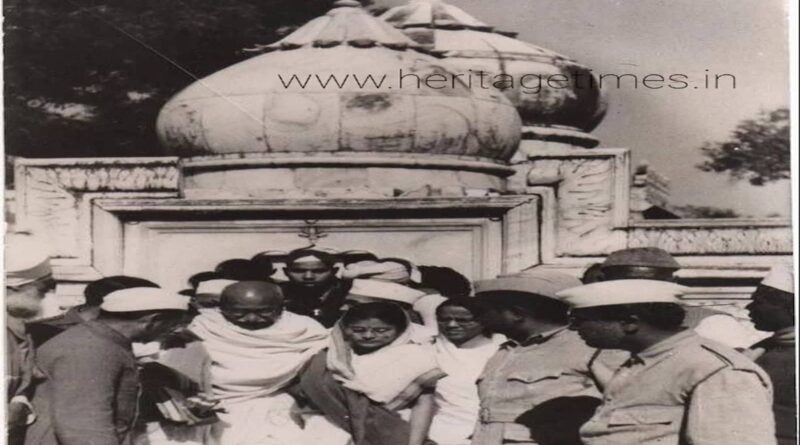
Mahatma Gandhi visited Dargah of Qutubbudin Bakhtiyar Kaki, Mehrauli, Delhi amidst the communal riots on 27th January, 1948. He was killed two days later on 30th January by Nathuram Godse. Generally women were not allowed in the innermost shrine but the condition was waived off in order to allow women with Gandhi inside.
Read More