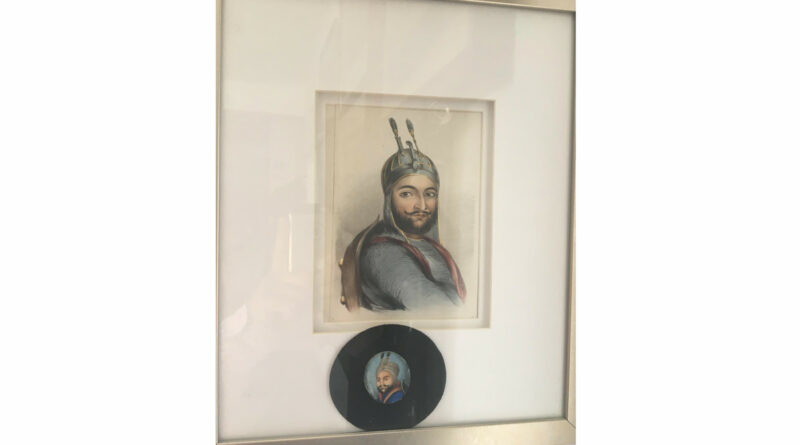
BATTLE OF JAMRUD 1837 FROM ‘AFGHANISTAN IN THE AGE OF EMPIRES’
The reasons that led to the Battle of Jamrud in 1837 of Afghanistan fought between the Sikhs and the Pashtuns.
Read More
Exploring lesser known History
The reasons that led to the Battle of Jamrud in 1837 of Afghanistan fought between the Sikhs and the Pashtuns.
Read More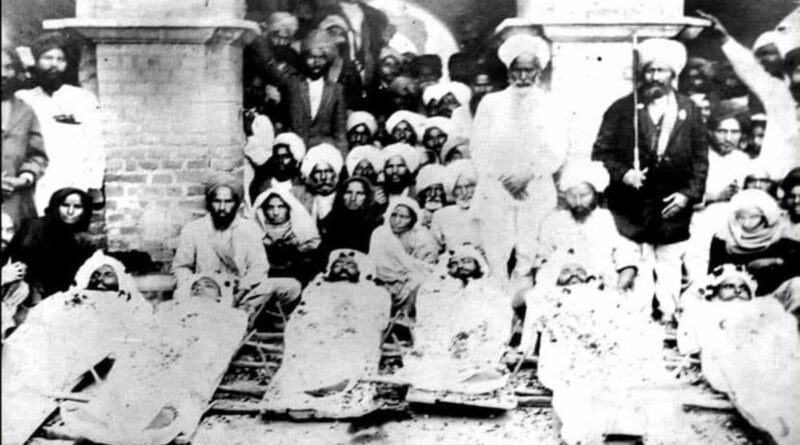
Bhagat Singh wrote an article on the crucifixion of the six Babbar Akalis for the Hindi Paper Pratap, tracing the history of the Babbar Akali Movement and praising their acts of courage and bravery.
Read More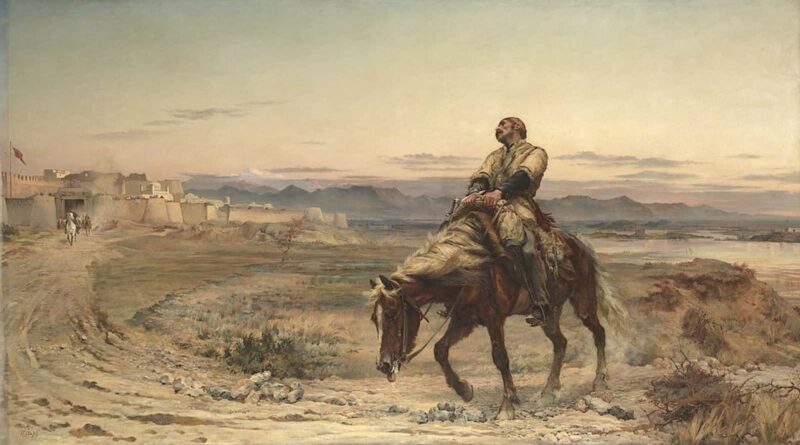
The 13th is considered unlucky by some, but it was on 13th January 1842 that the first survivor of the
Read More
Abraham Lincoln (February 12, 1809 – April 15, 1865) was an American politician and lawyer who served as the 16th President of the United States from March 1861 until his assassination in April 1865. Lincoln led the United States through its Civil War—its bloodiest war and perhaps its greatest moral, constitutional, and political crisis. In doing so, he preserved the Union, abolished slavery, strengthened the federal government, and modernized the economy. Abraham Lincoln wrote a famous letter to his son’s teacher, who must read for all parents, Abraham Lincoln wrote to his son’s teacher:
Read More
The biggest achievement of Khuda Baksh was creating a public library from the precious collections of his father and making his own valuable collection of books, which was later named as “Oriental Public Library”.
He started constructing a separate special building for the library, which was completed in two years. The library was inaugurated by the Lieutenant Governor of Bangal Sir Charles Elliot in 1891. At that time it was having around 4000 hand written books in the library.
Read More
Obaidullah, the second son of Sultan Jehan Begum of Bhopal was a Hafiz-e-Quran. He accompanied Sultan Jehan Begum during her famous Hajj pilgrimage in the year 1903. Below is an interesting event from their Hajj journey.
Read More
In January 1883 Sir Syed Ahmad Khan delivered a speech in Patna, emphasizing the need for cordial relations between Hindus and Muslims. Excerpts from this speech follow.
Read More
During my (Bipin Chandra Pal) college life in Calcutta, the country was passing through great political changes that had a lasting effect upon social and political evolution. During the closing years of my school days, Lord Mayo was the Indian Viceroy. His brief Viceroyalty was noted for the deportation of the Wahabi leader, Amir Khan.
Read More
Nandini Satpathy served as a minister in the Indira Gandhi government before being chosen as CM of Odisha. In her long public career, she never lost an election.
It all began with that anti-British protest where, as an eight-year-old, Satpathy was beaten up by the police.
Read More
On 11th August 1880, the whole World woke up to the shocking news that SS Jeddah, a ship carrying 953 hajjis (pilgrims for Mecca), had drowned in the sea near Cape Guardafui, near the easternmost point of Africa, on 8th August. All on board perished except the captain, his wife, the chief officer, the chief engineer, the assistant engineer, and 16 Indian crew members. The survivors were rescued by SS Scindia and landed at Aden in Yemen.
Read More
Reading history becomes more interesting when we realise the silences in the narratives we study or listen to. One such less talked about, but important, event is the Police Mutiny of Patna during the last week of March in 1947.
Read More
In 1894, the Nizam of Hyderabad, the sixth ruler of a powerful Islamic dynasty in central India, conferred upon the photographer Raja Deal Dayal the title of Raja Bahadur Mussavir Jung (“Bold Warrior of Photography”).
Read More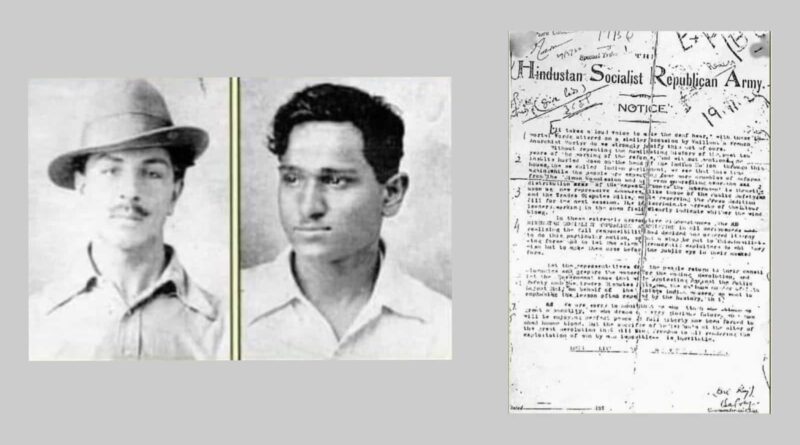
On April 8, 1929, Bhagat Singh and Batukeshwar Dutt dropped the “Red” leaflet from the gallery of the Legislative Assembly simultaneously with the bombs signed by ‘Balraj’ ‘Commander-in-Chief’ of the “Hindustan Socialist Republican Arny” and runs as follows :
Read More
Manabendra Nath Roy (M N Roy) wrote a book, The Historical Role of Islam. The book was published in 1937 shortly after Roy came out of jail after six years’ imprisonment for his role in the Indian revolutionary movement. Roy is considered to be one of the tallest revolutionary figures of the Indian Freedom Struggle. He also played an important role in the formation of the Communist Party of India before parting his ways with the communist movement.
Read More
Tomorrow will mark the 150th anniversary of the birth of Mohandas Karamchand Gandhi on October 2, 1869. He is better
Read More
In all probability Muslims planning to slaughter cows were also paid agents of the British because cow slaughter was already banned by Bahadur Shah Zafar. So it was planned that on 2nd August cows will be slaughtered on Eid to fan communal tensions in Delhi. As soon as Hindus and Muslims started fighting the British army would attack the city.
Read More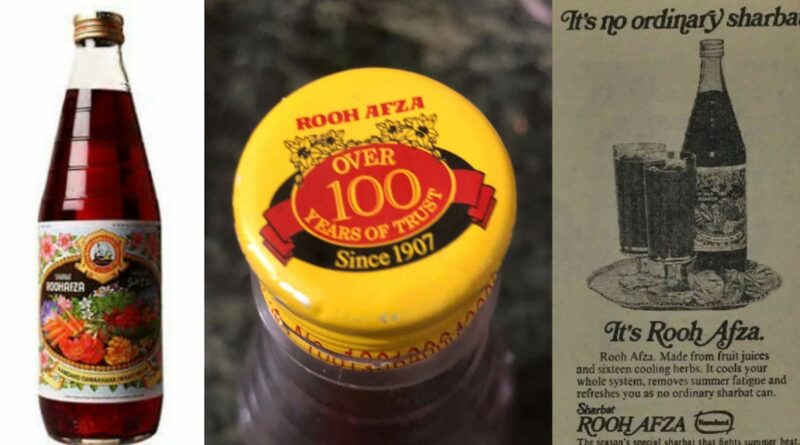
Rooh Afza started as a medicinal drink and became popular as a summer drink in Delhi. By 1947, Rooh Afza was found in every Delhi kitchen.
Read More
On the 4th of May 1799, the British army assembled around the fort of Seringapatnam, capital of the Kingdom of Mysore. The British army was supported by Nizam and Maratha infantry. The French intelligence, an ally of Tipu gave him a tip of ‘an eminent British attack’, they advised Tipu Sultan to escape the capital and live to fight for another day, Tipu replied, ‘Better to live one day as a tiger than a thousand years as a sheep’.
Read More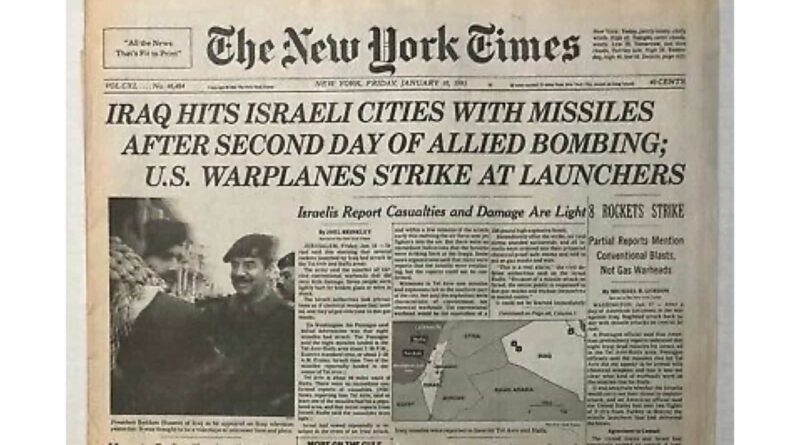
West Asia region has been a fascinating place for international politics. The region continues to see wars, revolutions, civil wars, invasions and what not for centuries now. There have been some intriguing circumstances that make this region a prime focus in the International arena.
Read More
Rash Behari Bose was one of the great leaders behind the Ghadar revolution and the Azad Hind Fauj. He was certainly one of the revolutionaries who led India to its independence
Read More