Maulana Azad: The First Education Minister & the Unfinished Dream of Equality
A leader whose vision was larger than his time
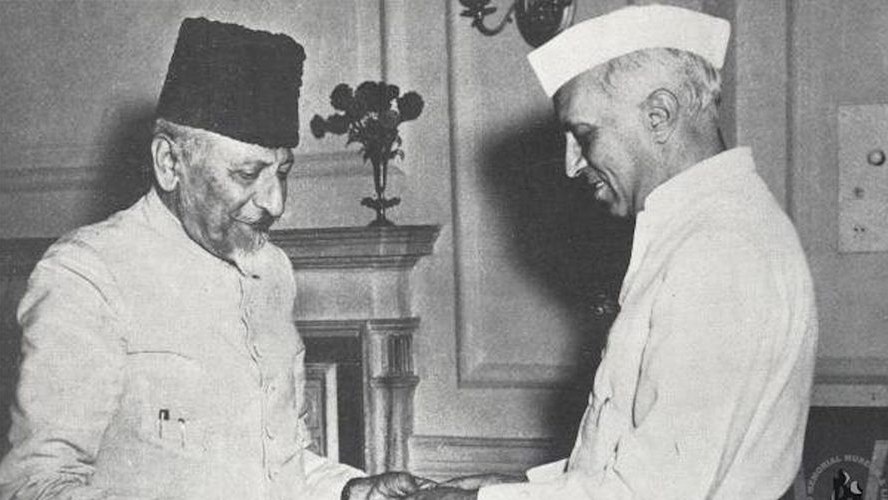
Maulana Abul Kalam Azad (1888-1958) was among the most intellectually influential leaders of India’s freedom movement. His contribution to Indian nationalism, secularism, education and cultural development deserves a more serious assessment than the ceremonial tributes generally offered on his birth anniversary. As India’s first Education Minister, from 1947 to 1958, Azad inherited a country devastated by colonial exploitation, Partition, communal violence, poverty and widespread illiteracy. He understood that political independence would have little meaning if the majority of Indians remained deprived of education, scientific knowledge and opportunities for social advancement.
His educational vision was ambitious: establish strong universities, promote scientific research, expand technical education, strengthen cultural institutions and make elementary education accessible to every child. Yet there is a fundamental contradiction in the history of India’s educational development. While the country established prestigious institutions of higher learning, universal literacy and equal educational opportunity remained distant objectives. The central question, therefore, is not simply how much Maulana Azad contributed to Indian education, but how far independent India fulfilled the educational and social vision he articulated. Azad deserves recognition as an architect of modern Indian education, but his legacy also demands an examination of the unfinished promises of educational democracy.
Maulana Azad: A nationalist who challenged colonialism and communal politics
Born on 11 November 1888, Azad developed an extraordinary intellectual personality through his engagement with Islamic scholarship, philosophy, history, literature and modern political thought. His journalism through Al-Hilal, launched in 1912, challenged British imperialism and encouraged political consciousness among Indian Muslims. The colonial government eventually suppressed the publication because of its political influence. Azad’s leadership was particularly significant because he rejected the politics of religious separation. At a time when communal identities were increasingly influencing Indian politics, he argued that Hindus and Muslims shared a common historical and national destiny.
He became Congress president in 1923 at the age of 35, making him the youngest person to hold that office at the time. He again led the Congress from 1940 to 1946, one of the most difficult periods of the freedom struggle. His opposition to Partition was not merely a political position; it reflected his conviction that India’s cultural and historical identity could not be divided along religious lines. However, his political defeat on the question of Partition remains an important historical lesson. His vision of composite nationalism could not overcome the growing communal polarisation and political disagreements of the 1940s. Azad’s contribution must therefore be understood in two dimensions: his extraordinary commitment to a united and secular India, and the failure of the political leadership of the period to prevent Partition.
The educational crisis inherited by Azad: The statistics of colonial India
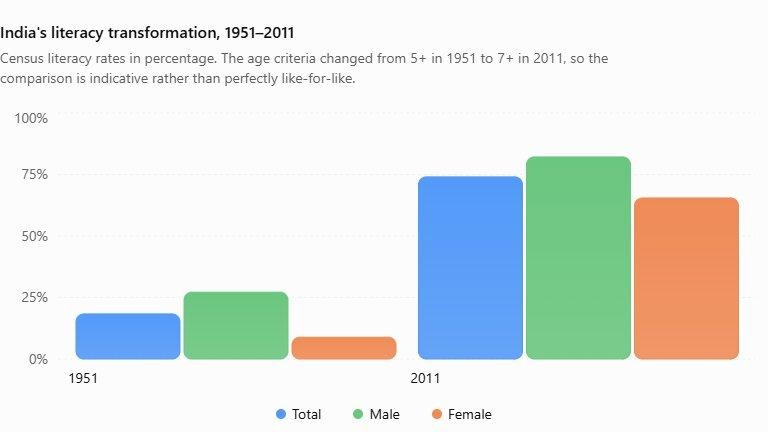
To understand Azad’s contribution, it is necessary to examine the educational conditions of India at independence. The 1951 Census recorded an overall literacy rate of only 18.33 per cent. Male literacy was 27.16 per cent, whereas female literacy was just 8.86 per cent. In rural India, educational deprivation was even more severe. The challenge was not simply the absence of schools. It was a structural problem involving poverty, caste discrimination, gender inequality, colonial neglect and the concentration of educational facilities in urban areas.
India’s literacy transformation, 1951-2011
Source: Census of India figures reproduced by the Government of India
These figures demonstrate the scale of the educational challenge. Azad was expected to transform a largely illiterate society into an educated democratic nation with limited financial resources and weak institutional infrastructure. He advocated universal elementary education, particularly free and compulsory education for children up to 14 years. This principle was later reflected in Article 45 of the Constitution in its original form. The critical point is that Azad understood education as a democratic entitlement, not merely an instrument for producing government employees. However, the question remains: did the Indian state invest sufficiently in the universal education that Azad advocated? The subsequent history suggests that the answer is mixed.
The paradox of institution-building: IITs versus primary schools
Azad’s institutional contribution was substantial. During his ministerial tenure, India developed an important foundation for scientific, technical and cultural education.
Some major milestones were:
- 1950: Establishment of the Indian Council for Cultural Relations.
- 1951: Establishment of IIT Kharagpur.
- 1953: Formal inauguration of the University Grants Commission.
- 1953: Establishment of the Sangeet Natak Akademi.
- 1954: Establishment of the Sahitya Akademi.
- 1954: Establishment of the Lalit Kala Akademi.
These institutions helped establish India’s intellectual and scientific infrastructure. But a critical question must be raised: why did India’s higher education institutions develop more visibly than universal elementary education?
India needed scientists, engineers, administrators and researchers. Azad was correct in recognising that a newly independent nation required advanced scientific capabilities. IIT Kharagpur represented an important investment in technological self-reliance. Nevertheless, millions of children needed basic schooling, nutritious food, trained teachers and accessible educational infrastructure. There was a fundamental imbalance between the ambition to build institutions of excellence and the capacity to deliver elementary education to the masses.
This is not an argument against IITs or universities. Rather, it is an argument that educational excellence and educational equality should have advanced together. A democratic country cannot measure educational success only through the number of prestigious institutions it creates. It must also measure how many poor children, rural households, girls and disadvantaged communities receive quality education. The subsequent history of Indian education demonstrates that this challenge remained unresolved for decades.
Muslim educational backwardness: Azad’s unfinished mission
One of the most important dimensions of Azad’s legacy is his understanding of the relationship between modern education and Muslim social advancement. He believed that Indian Muslims should acquire modern scientific, technical and professional knowledge while maintaining their cultural and intellectual heritage. This was especially important in the aftermath of Partition. Many Muslim families experienced displacement, insecurity, economic disruption and the loss of established educational and professional opportunities. Azad opposed the idea that Muslims should withdraw from modern institutions or isolate themselves from national development. His emphasis was on educational participation, intellectual advancement and constitutional citizenship. Yet the persistence of educational disadvantages among sections of the Muslim population remains a serious concern.
What do contemporary statistics reveal?
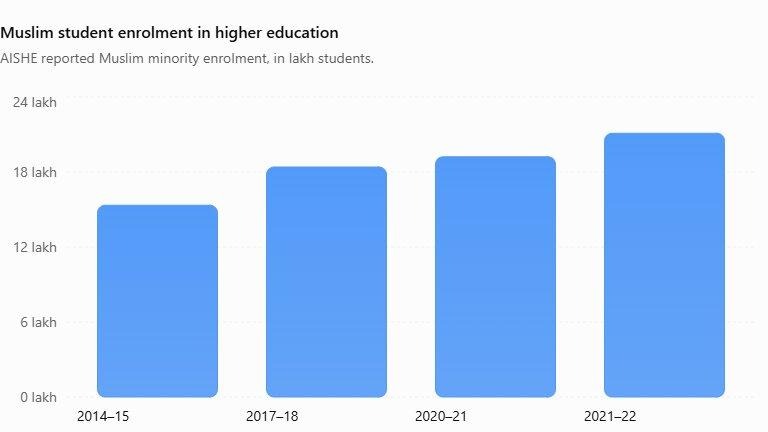
The Sachar Committee Report (2006) documented substantial educational and socioeconomic disadvantages affecting Indian Muslims. It found that Muslim representation in higher education and public employment was disproportionately low relative to their population share. More recent evidence from the Ministry of Education’s All India Survey on Higher Education (AISHE) 2021–22 provides an important perspective.
Muslim student enrolment in higher education
(As per AISHE reported Muslim minority enrolment, in lakh students).
The same report recorded 10.4 lakh female Muslim students in higher education in 2021-22, compared with 7.13 lakh in 2014-15. This represents an increase of approximately 46 percent.
Source: Education Government of India
These figures show progress, but they do not establish that educational inequality has disappeared. Indeed, the distinction between increasing enrolment and achieving equal opportunity is crucial. An increase in the number of Muslim students does not automatically establish parity in higher education participation, completion rates, professional representation or access to prestigious institutions.
The government must therefore pay greater attention to:
- Scholarships and financial assistance for economically disadvantaged students.
- Quality government schools in educationally deprived Muslim-concentration areas.
- Girls’ education and prevention of school dropouts.
- Vocational education and employment-oriented skills.
- Access to competitive examinations, research and professional education.
- Digital infrastructure and English-language learning opportunities without neglecting Indian languages.
The real tribute to Azad would be to transform educational opportunity into a practical reality for every disadvantaged child, irrespective of religious or social background.
Women’s education: The biggest test of educational democracy
Azad’s emphasis on women’s education was particularly progressive in the social context of the 1940s and 1950s. In 1951, female literacy was just 8.86 per cent. By 2011, it had increased to 65.46 per cent. Although the improvement was remarkable, the gender gap remained significant.
Female literacy in India, 1951-2011
Source: Press Information Bureau
The progress reflects the combined efforts of successive governments, social reformers, educational institutions and civil society. However, women’s educational participation continues to be affected by household poverty, inadequate infrastructure, safety concerns, unpaid domestic responsibilities and regional inequalities. Azad’s philosophy offers a useful reminder that women’s education is not a secondary component of development. It is central to economic independence, social mobility and democratic participation. The unfinished task is to ensure that girls do not merely enter schools but also complete their education, access higher learning and participate equally in the labour market.
The contemporary education crisis: Literacy is not enough
India has made enormous progress since independence. According to Census 2011, the national literacy rate reached 74.04 per cent, compared with 18.33 per cent in 1951. However, literacy alone does not necessarily indicate educational quality. The Annual Status of Education Report (ASER) 2024 provides an important insight into the continuing challenges of foundational learning in rural India.
According to ASER 2024:
- Only 27.1 per cent of government-school children in Standard III could read a Standard II-level text.
- The proportion of all Standard III children able to perform at least a basic subtraction task was 33.7 percent.
- Among Standard V children, 30.7 percent could perform division.
- There was an improvement in foundational learning compared with 2022, but substantial gaps remained.
Source: ASER Annual Status of Education Report
These findings raise an important question about the quality of India’s education system. India has expanded school enrolment, constructed educational infrastructure and introduced several ambitious programmes. Nevertheless, learning outcomes remain a major concern. Azad’s vision of education was not limited to the physical establishment of schools. He wanted an enlightened society capable of independent reasoning, scientific understanding and responsible citizenship. In this context, contemporary educational policy must move beyond enrolment figures and focus on:
- Foundational literacy and numeracy.
- Teacher training and accountability.
- Public-school infrastructure.
- Critical thinking and scientific temper.
- Digital inclusion.
- Affordable higher education.
- Research and innovation.
The ASER findings are particularly important because they demonstrate that the educational challenge has shifted from access alone to the quality and effectiveness of learning.
Azad and the politics of secularism: Education as a defence against communal polarisation
Azad’s political philosophy cannot be separated from his educational vision. He believed that education should encourage rational thinking, social harmony and respect for different religious traditions. His understanding of nationalism was based on shared citizenship rather than religious identity. This position was especially important during the Partition period, when communal violence created deep divisions in Indian society. Azad argued that Indian Muslims were not outsiders in India. Their history, literature, architecture, language and intellectual contributions were inseparable from the development of Indian civilisation. His political argument was therefore also an educational argument: the history of India should be understood through its pluralistic experiences rather than through a narrow communal interpretation. This principle remains relevant in contemporary debates over school textbooks, historical interpretation, university autonomy and the representation of minority contributions. However, secular education does not mean suppressing religious or cultural diversity. It means ensuring that educational institutions do not discriminate against students on the basis of their religious identity. The challenge before India is to protect academic independence while developing a curriculum that encourages historical understanding, constitutional morality and critical inquiry. Azad’s legacy provides an important intellectual foundation for this approach.
Was Azad successful? A critical evaluation of his ministerial tenure
A balanced assessment must distinguish between Azad’s personal contribution, the collective decisions of the Nehru government and the structural limitations of the newly independent Indian state.
| Area | Achievement | Unfinished challenge |
| Higher education | Development of IITs and UGC | Unequal access to quality universities |
| Scientific education | Promotion of technical and scientific learning | Limited research funding and infrastructure |
| Primary education | Advocacy of free and compulsory education | Universal access remained unrealized |
| Women’s education | Strong policy advocacy | Persistent gender inequalities |
| Cultural development | National cultural academies | Unequal cultural and linguistic representation |
| Minority education | Advocacy of modern and inclusive education | Persistent socioeconomic disadvantages |
| National integration | Promotion of composite nationalism | Continuing communal polarisation |
There are three major historical criticisms worth considering.
First, insufficient universalisation: The government did not achieve universal elementary education during Azad’s tenure. Although he advocated it, implementation remained constrained by inadequate resources and administrative limitations. Second, the higher education versus primary education debate: Institution-building was essential, but elementary education needed greater and more consistent attention. India’s subsequent educational history demonstrates the consequences of failing to resolve this imbalance early. Third, the gap between constitutional ideals and social reality: Equality of educational opportunity was a democratic commitment, but caste, gender, poverty and regional disparities continued to determine who could access quality education. These criticisms should not be interpreted as a personal indictment of Azad. The educational transformation of a vast and poor country could not be accomplished by one minister. However, his tenure provides an important opportunity to assess the priorities and limitations of India’s early nation-building model.
Why contemporary India must revisit Azad’s educational vision
India is now pursuing ambitions in artificial intelligence, digital public infrastructure, scientific research, semi-conductor manufacturing and global economic competitiveness. But technological ambition requires educational equality. A country cannot become a global knowledge power if millions of children lack foundational learning, rural schools remain under-resourced and disadvantaged communities face barriers to higher education.
Azad’s educational vision can be revisited through five policy priorities:
- Universal quality education: Strengthen government schools and ensure that poverty does not determine educational opportunity.
- Minority and disadvantaged-community empowerment: Expand targeted educational support based on measurable disadvantage and transparent criteria.
- Women’s educational independence: Improve access to secondary, higher and technical education.
- Scientific and technological development: Invest in public universities, research institutions and AI education.
- Secular and constitutional citizenship: Protect academic freedom, critical thinking, pluralism and the constitutional principles of equality.
The government should also establish transparent indicators to measure educational progress across gender, caste, religion, income and geographical location. Without such disaggregated assessment, national averages can conceal the educational deprivation of particular communities.
Conclusion: Azad’s real legacy is an unfinished promise
Maulana Abul Kalam Azad was not simply the first Education Minister of independent India. He was a political intellectual who understood the relationship between education, freedom, national identity and social justice. His contribution to institution-building was historic. His advocacy of scientific education, women’s advancement, cultural preservation and national integration helped establish the foundations of modern Indian education. But his legacy should not be reduced to the establishment of IITs, UGC or cultural academies. His greatest aspiration was to democratise education and make it accessible to every Indian. The contrast between 18.33 per cent literacy in 1951 and 74.04 per cent in 2011 demonstrates substantial national progress. Yet ASER 2024 shows that access to schooling does not automatically translate into adequate learning. Similarly, the continuing educational disadvantages experienced by sections of Muslim society, women, economically weaker households and socially marginalised communities demonstrate that educational equality remains an unfinished national project.
Azad’s contribution also offers an important political lesson: secularism cannot survive merely through constitutional declarations. It requires educational institutions that promote reason, scientific temper, historical understanding and respect for diversity. India must therefore move beyond commemorating Maulana Azad through speeches and annual celebrations. His ideas should become measurable public policies. The real tribute to Maulana Abul Kalam Azad would be an India where no child is denied education because of poverty, religion, caste, gender or geographical location; where universities are centres of independent thought; and where education becomes the strongest instrument of social justice and national integration. His dream was not merely to educate India, but to create an enlightened India. That dream remains unfinished.
References
- Government of India, Ministry of Education (2008). Maulana Abul Kalam Azad: Educationist and Scholar Extraordinary.
- Government of India, Census of India. Literacy Rates, 1951-2011.
- Government of India (2006). Social, Economic and Educational Status of the Muslim Community of India: Sachar Committee Report.
- Ministry of Education (2024). All India Survey on Higher Education 2021-22.
- ASER Centre (2025). Annual Status of Education Report 2024.*
- Azad, Maulana Abul Kalam. India Wins Freedom: An Autobiographical Narrative.
- Azad, Maulana Abul Kalam. Ghubar-e-Khatir.
*Statistical clarification: ASER 2024 reports that 27.1% of all rural Standard III children could read a Standard II-level text; the corresponding figures were 23.4% in government schools and 35.5% in private schools. The 1951 and 2011 literacy rates also use different minimum-age criteria.
(The views expressed are personal to the author)