
Remembering Shah Kabir Uddin Ahmad: A Visionary Leader’s Impact on Bihar’s History
Remembering Shah Kabir Uddin Ahmad: A Visionary Leader’s Impact on Bihar’s History
Read More
Exploring lesser known History
Remembering Shah Kabir Uddin Ahmad: A Visionary Leader’s Impact on Bihar’s History
Read More
Nana Saheb Peshwa’s 1857 proclamation described the British as “Kafirs” and called for the restoration of Hindu and Muslim kingdoms.
Read More
Tawaif and kotha were looked down upon in the Indian society and any man visiting them could face social boycott as well. A case study of Zulfiqar Ali Bukhari’s experience in early 20th century Delhi.
Read More
The evidence at the desk of a historian tells that Allah Hafiz was in usage at least since the early 19th century.
Read More
It is no secret that hand-spinned clothes and secularism became the cornerstone of Mahatma Gandhi’s movement. Gandhi was actually a fulfilment of Ganesh Kolhatkar’s prophecy made in 1868 that “those who wish to be remembered in the future history of India, ought not to shrink back from undertaking this work (of making clothes in India and boycott British made cloth)”.
Read More
In the areas where war is waged or which the Japanese occupy or where they infiltrate, the foreigner’s civil rule will weaken or come to an end. In these areas we must establish a Swaraj Government. In the name of this Government we must appeal to retreating units of the Indian Army to stay behind and become the people’s army.
Read More
He stayed in America for nearly eight years and studied at five different Universities. He started as a student of Mathematics, Physics and Chemistry and then devoted years to the study of Biology, Psychology, Economics and Sociology. He had several times interrupted his studies in order to earn enough to carry on at his University for a term or two. He had worked as a farm labourer for ten hours a day, as a packer in a jam factory, as a mechanic in an iron concern, as a waiter in a restaurant. He had tried his hand as a salesman. When, therefore, he returned to India in 1929, it was not as a raw student looking forward to a comfortable life, but as one who had seen life at close quarters and was fully determined to devote himself to public life.
Read More
The machine (EVM) could also eliminate booth-capturing as it would become possible for the Election Commission to introduce mobile polling stations to take the machines to the doorsteps of the people, especially the weaker sections.
Read More
Akbar Allahabadi was senior to Iqbal and he wrote a reply to Sare Jahan Se Achcha in form of another poem.
Read More
The idea of reservation to OBCs (Hindus, Muslims or Sikhs) came about in 1990 after the Mandal Commission recommendations were implemented. The reservation under article 341 defined only SC community and most of these Pasmanda castes don’t come under this identification.
Read More
“This is the Congress radio calling on 42.34 meters from somewhere in India,” spoke Usha Mehta after the Quit India Movement had been silenced by the Britishers.
Bollywood actress Sara Ali Khan plays Usha Mehta in her movie Ae Watan Mere Watan.
Read our special feature about India’s bravest Radio Jockey ,fondly known as Radio Ben
Read More
CAPTAIN LAKSHMI SAHGAL – Doctor by Job, Freedom Fighter by Will
Read More
During the Bengal famine, Sahir Ludhianvi wrote a poem which has a couplet:
Read More
In 1839, Samuel Morse, reputed as the telegraph pioneer, laid the first telegraph lines connecting Washington to Baltimore. In India, the same year, O’Shaughnessy completed 21 miles of a telegraph line wrapped around trees and vast stretches which included a river crossing of 4 miles as an experiment.
Read More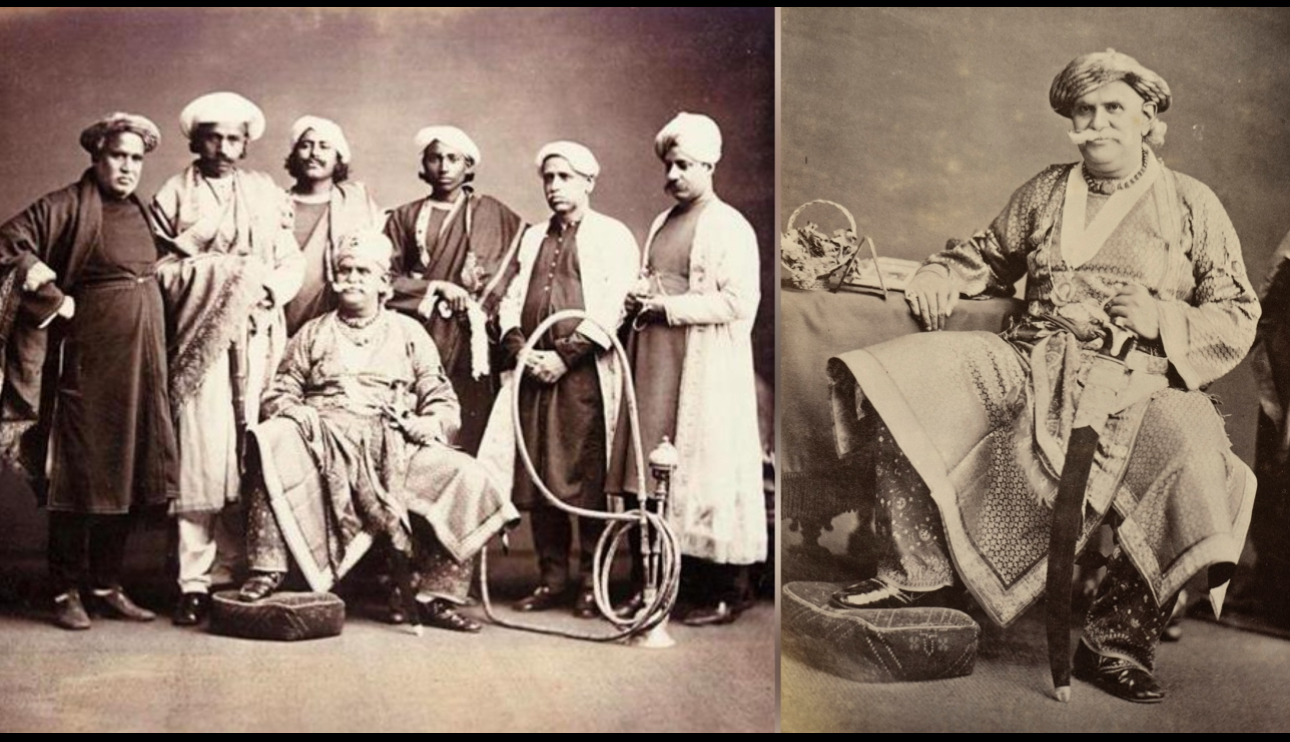
Democracy is an occidental idea. A Hindu cannot comprehend it as long as he is a Hindu. It is against his religious belief. The divisions of Varna are the basis of his religion. He cannot see without distress a Brahman or Kshtriya serving a Sudra. A Brahman may beg or even may die, yet he will never touch a dish from which a Sudra has partaken food.
Read More
Allama Iqbal Letter to Mahatma Gandhi, declining the offer of Vice-chancellorship of Jamia Millia Islamia, Aligarh, 29th November 1920.
Read More
Why do we celebrate the Republic Day of India on 26 January?
Read More
Zafaruddin Bihari: A Scholarly Luminary and Reviver of Islamic Knowledge in South Asia
Read More
Syed Mohammad Moin ul Haq, a name that resonated with brilliance and intellect, emerged from the humble town of Asthawan, Nalanda district in 1881.
Read More
The photograph shows Mirza Ilahi Bakhsh, or Shahzada Muhammad Hideyat Afza, in 1862. This man was from the Royal house of Mughals who had helped the British in 1857 and played an instrumental role in the surrender of Bahadur Shah Zafar at Humayun’s Tomb. For his ‘services’, the British recognized him as the Chief Representative of the Royal Mughal Family in 1858. Mirza was also granted jagirs at Meerut and Delhi with a pension of Rupees 22,830 P.A.
Read More